4WD RC Off-Road Truck With Lights: Fast Night Racing Tips
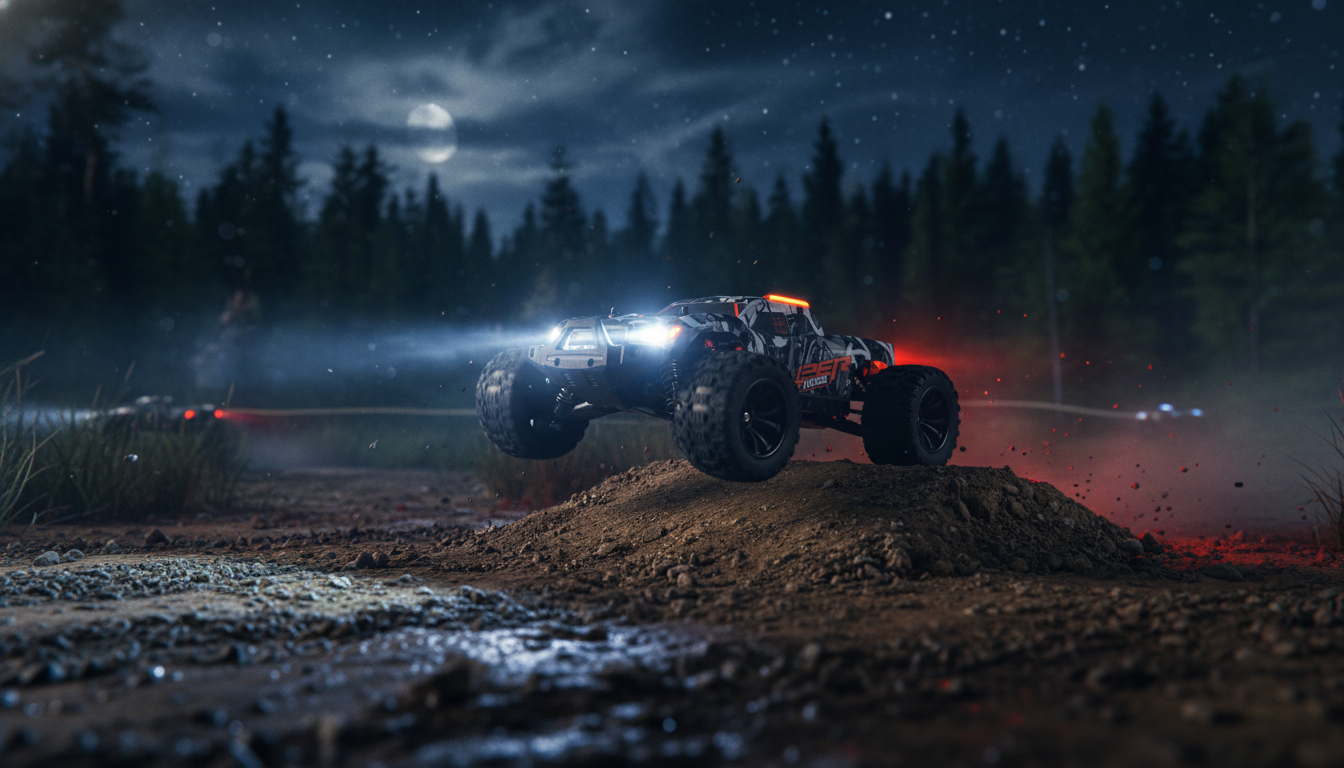
A 4WD RC off-road truck with built-in lights adds a new layer of fun for evening laps, driveway races, and rough-terrain exploring. The right setup makes a big difference: traction that stays planted on loose dirt, a “fast” feeling that shows up in acceleration and cornering, enough durability to handle tumbles, solid control range, and battery habits that keep power consistent for run after run.
What Makes a 4WD Off-Road RC Truck Different
Four-wheel drive changes how an RC truck puts power down. Instead of relying mostly on the rear tires to push the truck forward, 4WD spreads the workload across all four corners, which is especially noticeable on dirt, grass, and gravel.
- More forward bite on loose terrain: 4WD traction helps it keep moving when a 2WD truck might fishtail or dig in.
- More predictable handling: On uneven ground, 4WD tends to feel steadier through turns and over small bumps.
- Better climbing and obstacle stability: Roots, ruts, and gravel piles are easier to approach without losing momentum.
- A bit more drivetrain to monitor: Because more parts are transferring power, it’s smart to do quick checks for wrapped grass, pebbles, and wear.
High-Speed Racing Feel: Where Speed Really Shows Up
“High speed” isn’t only about a top-speed number. Around cones, patio furniture, or a backyard loop, speed is mostly felt in how quickly the truck launches, how confidently it holds a line, and how calmly it settles after impacts.
- Acceleration and grip: A truck that jumps to pace out of a corner often feels faster than one that only shines on a long straightaway.
- Wheelspin control: On loose dirt, smoother throttle inputs keep it tracking straight and can reduce traction rolls.
- Suspension behavior: Travel and rebound matter when the surface is lumpy. If it “pogo sticks” after bumps, it’s harder to stay on-throttle.
- Tires and surface: The same truck can feel wildly different going from pavement to grass; grass adds drag and demands more torque and traction.
Lights for Low-Light Driving: Practical Benefits and Limitations
Integrated lights make dusk driving more enjoyable and less guesswork-heavy—especially when the truck turns away, crests a small hill, or dips into shadowed areas near shrubs and fences.
- Orientation at a glance: Lights help you tell which direction the truck is facing when it’s far out or rotating mid-turn.
- Obstacle awareness: Shadows can hide curbs, sprinklers, and uneven ground; lights help reveal the surface ahead.
- Better results with a simple “night track”: Add cones, reflective tape on markers, or chalk lines to keep the course readable.
- Safety still comes first: Lights improve visibility but don’t make an unsafe area safe. Avoid roads, traffic-prone driveways, and crowded spaces. For toy safety guidance, the U.S. Consumer Product Safety Commission (CPSC) is a helpful reference.
RC Off-Road Truck 4WD High-Speed Racing with Lights: Quick Specs Snapshot
If the goal is dirt trails, backyard jumps, and evening laps, it helps to check a few essentials before the first run. Keep a small maintenance kit nearby (soft brush, microfiber cloth, and a small screwdriver) for fast post-run cleanup and minor adjustments.
At-a-Glance Checklist
| Feature | Why it matters | What to look for before first run |
|---|---|---|
| 4WD drivetrain | Improves traction and control off-road | Check wheels spin freely; remove packing materials |
| High-speed handling | Stability in turns and over bumps | Test steering trim; start on a wide open area |
| Integrated lights | Orientation and visibility in low light | Confirm lights turn on; avoid wet grass at night |
| Terrain capability | Determines where it performs best | Inspect tires for debris; choose dirt/grass/gravel first |
| Battery routine | Run time and long-term reliability | Charge on a nonflammable surface; cool down between runs |
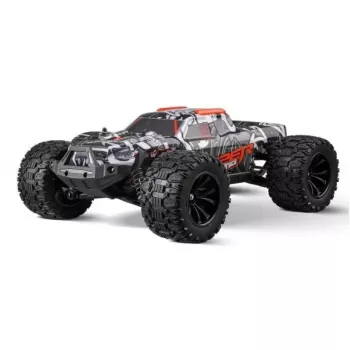
For a ready-to-run option built for night runs and rougher surfaces, see the RC Off-Road Truck 4WD High-Speed Racing with Lights.
How to Set Up a Simple Backyard Race Course (Day or Night)
A simple course makes practice more fun because you can repeat the same turns and jumps and feel real improvement. The key is keeping it wide and forgiving at first, then tightening it up once control feels natural.
If you like organized checklists for repeatable setups (course layout, pre-run checks, post-run cleanup), a lightweight planning add-on like Boost Your AI Prompts for Better Output – Checklist for Creators, Coaches & Entrepreneurs can be repurposed into a simple routine tracker for RC sessions.
Battery, Charging, and Run-Time Habits That Keep Performance Consistent
For deeper background on battery care and safe handling, Battery University is a widely cited reference.
Care and Maintenance After Dirt, Grass, and Gravel
When to Upgrade Accessories (Without Overcomplicating It)
If you ever notice shorter range or interference, it can help to understand that RC controllers operate under radio rules; the FCC Part 15 overview explains the basics of radio frequency device authorization and interference expectations.
FAQ
Is a 4WD RC off-road truck better than 2WD for beginners?
Usually, yes—4WD tends to deliver easier traction and more predictable handling on loose dirt and grass. It can still roll over at speed, so start in a wide open area and practice smooth throttle and steering inputs.
Can the lights be used for full night driving?
Lights help with visibility and orientation, but the driving area still needs to be safe, open, and free of traffic or hidden obstacles. Simple reflective markers and avoiding wet grass at night make low-light sessions much more controllable.
How long should the battery cool before recharging?
Wait until the battery feels cool to the touch—often about 15–30 minutes depending on how hard the run was and the outdoor temperature. Always follow the charger and battery instructions for safe charging.














Leave a comment