Touchless Stainless Steel Sensor Trash Can for Busy Rooms
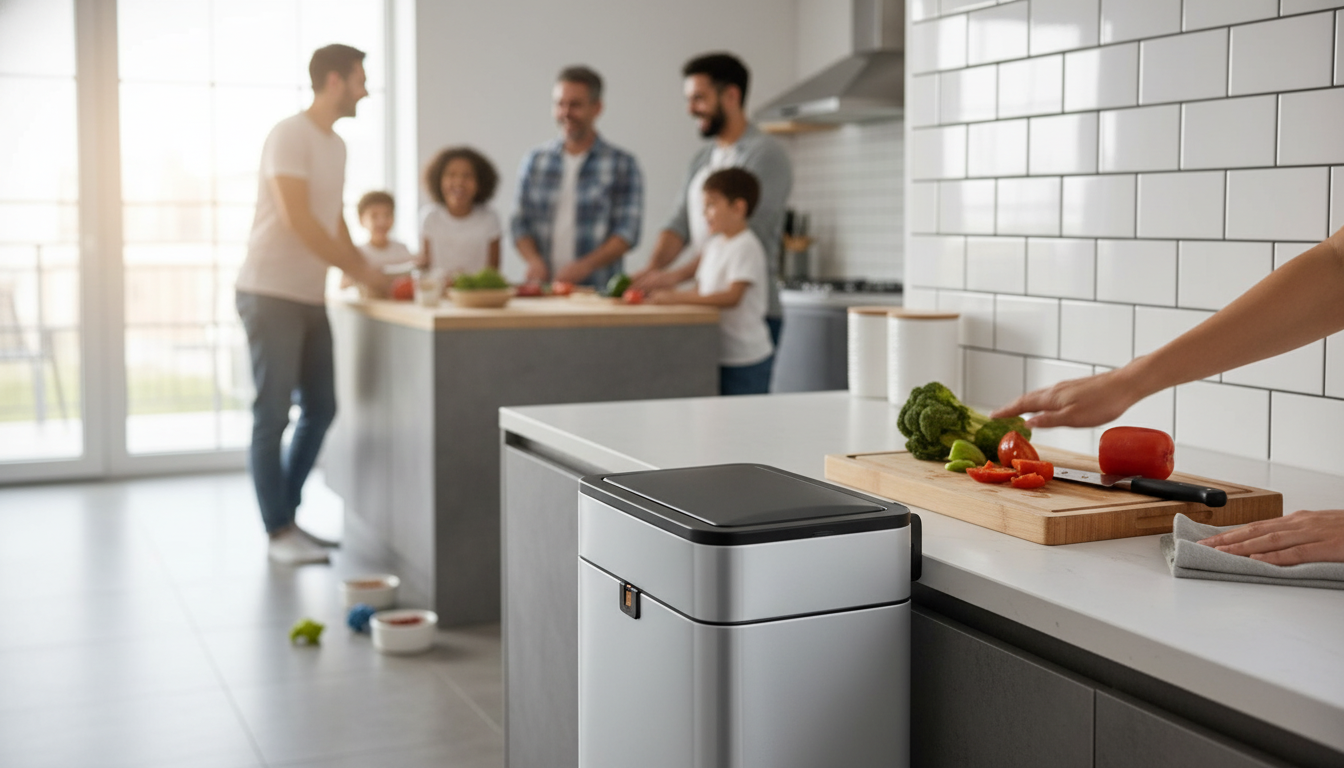
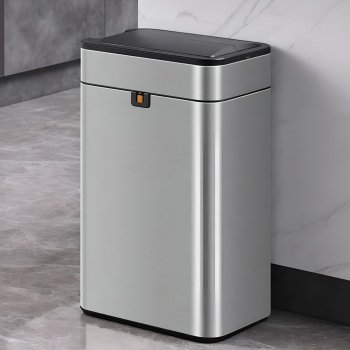
Touchless Stainless Steel Sensor Trash Can – Smart, High Capacity Waste Bin
A touchless sensor trash can keeps hands cleaner, reduces odors from frequent lid contact, and streamlines daily cleanup. With a stainless steel body and high-capacity design, this smart waste bin fits busy kitchens, offices, and shared spaces where mess and foot traffic add up fast.
Hands-free disposal is especially practical during food prep, when handling raw ingredients, or when you’re juggling paper towels and packaging. Pair that with a lid that stays closed between tosses, and everyday cleanup feels a lot less like a chore. For everyday hygiene reminders, the CDC handwashing guidance is a useful reference for why reducing touch points can help in shared households and workplaces.
What Makes a Touchless Sensor Trash Can Worth It
- Hands-free opening helps limit contact with germs, food residue, and sticky lids during cooking and cleanup.
- Faster disposal flow when both hands are full (plates, peels, packaging, paper towels).
- A consistent lid-close cycle can help contain odors compared to leaving lids open.
- Stainless steel exteriors tend to look cleaner longer and blend with modern appliances.
- High-capacity bins reduce liner changes and overflow in family kitchens and break rooms.
For many homes, the biggest day-to-day upgrade is simple: you don’t have to pause and touch the lid when your hands are messy. That small convenience often translates into a cleaner routine—especially around the sink, prep area, or coffee station where quick tosses happen all day.
Key Features to Look For in a Smart High-Capacity Waste Bin
- Sensor responsiveness: quick open when hands approach; minimal false triggers from passersby or pets.
- Lid behavior: smooth opening, steady close, and an option for manual open/close when needed.
- Capacity match: choose a size that fits the volume of daily waste and the available floor space.
- Material and finish: stainless steel for durability; consider fingerprint-resistance and easy wipe-down.
- Liner fit: a secure rim or inner ring that helps keep bag edges hidden and reduces slippage.
- Noise level: soft-close mechanisms are quieter in open-plan kitchens and offices.
- Power needs: battery access that’s easy, with a compartment protected from spills.
If you’re placing the bin in a high-traffic zone, prioritize a sensor that’s responsive up close but not overly “hair-trigger.” In tight layouts, placement matters just as much as the sensor itself—aim the front of the can toward open space instead of a hallway where people constantly pass by.
Product Snapshot: Touchless Stainless Steel Sensor Trash Can
For anyone looking to upgrade to a cleaner, more streamlined disposal setup, the Touchless Stainless Steel Sensor Trash Can – Smart, High Capacity Waste Bin is built around hands-free use and a high-capacity footprint that suits busy rooms.
- Designed for hands-free use to support cleaner routines during food prep, diaper changes, or frequent disposals.
- Stainless steel styling complements kitchens, laundry rooms, and workspaces with a polished, modern look.
- High-capacity form factor reduces how often the bag must be replaced in busy households.
- Works well in zones where you want to avoid touching surfaces: near counters, islands, or coffee stations.
- A smart waste bin is especially helpful for shared spaces where multiple people use the same can daily.
At-a-Glance Details
| Item | Details |
|---|---|
| Product | Touchless Stainless Steel Sensor Trash Can – Smart, High Capacity Waste Bin |
| Price | 806.99 USD |
| Availability | In stock |
| Product page | View product |
Where a High-Capacity Touchless Bin Fits Best
- Kitchen: place near the main prep area but not directly in a tight walkway to reduce accidental sensor triggers.
- Home office or studio: contains paper waste and packaging without interrupting workflow.
- Laundry room: useful for lint, dryer sheet disposal, and cleaning wipes while keeping hands free.
- Break room: reduces lid contact in shared spaces; helpful during flu season and busy workdays.
- Garage or workshop: keeps mess contained when hands are dusty or gloved (manual open option is useful here).
In a kitchen, a reliable “drop and go” setup helps keep counters clearer. In an office or studio, it prevents constant interruptions—no more stepping away mid-task to fight a lid or pedal.
Everyday Use Tips for Cleaner, Quieter Operation
Care and Maintenance for Stainless Steel
Quick Comparison: Touchless vs. Step vs. Open-Top
| Style | Best for | Trade-offs |
|---|---|---|
| Touchless sensor | Hands-free hygiene, busy kitchens, shared spaces | Needs power; placement can affect false triggers |
| Step pedal | Simple reliability, no batteries | Mechanical pedal wear; still a contact point |
| Open-top | Fast disposal where odor control is less critical | Less odor containment; can look messier |
If you’re also aiming to reduce overall waste, the EPA’s reduce, reuse, recycle resources offer practical guidance for setting up a cleaner disposal and sorting routine at home or at work.
More In-Stock Picks
- Touchless Stainless Steel Sensor Trash Can – Smart, High Capacity Waste Bin
- Boost Your AI Prompts for Better Output – Checklist for Creators, Coaches & Entrepreneurs | Digital Download
- Double-Layer Foldable Pet Stroller with Portable Carrier for Dogs and Cats
FAQ
How close does a hand need to be to trigger a touchless trash can?
Most sensor lids trigger at a short range in front of the sensor, and the exact distance varies by model and placement. Keeping the can out of tight walkways helps reduce accidental activation from people passing by.
Do stainless steel sensor trash cans show fingerprints?
They can, depending on the finish and how often the surface is touched. Microfiber wipe-downs help, and fingerprint-resistant finishes (when available) tend to stay cleaner-looking between wipes.
What can cause the lid to open by itself?
Common causes include nearby movement in tight spaces, reflective surfaces, direct sunlight, pets, dust on the sensor window, or low batteries. Repositioning the can, cleaning the sensor area, and replacing batteries usually resolves the issue.














Leave a comment