13-Inch Floor Cutter: Clean, Fast Cuts for Laminate & Vinyl
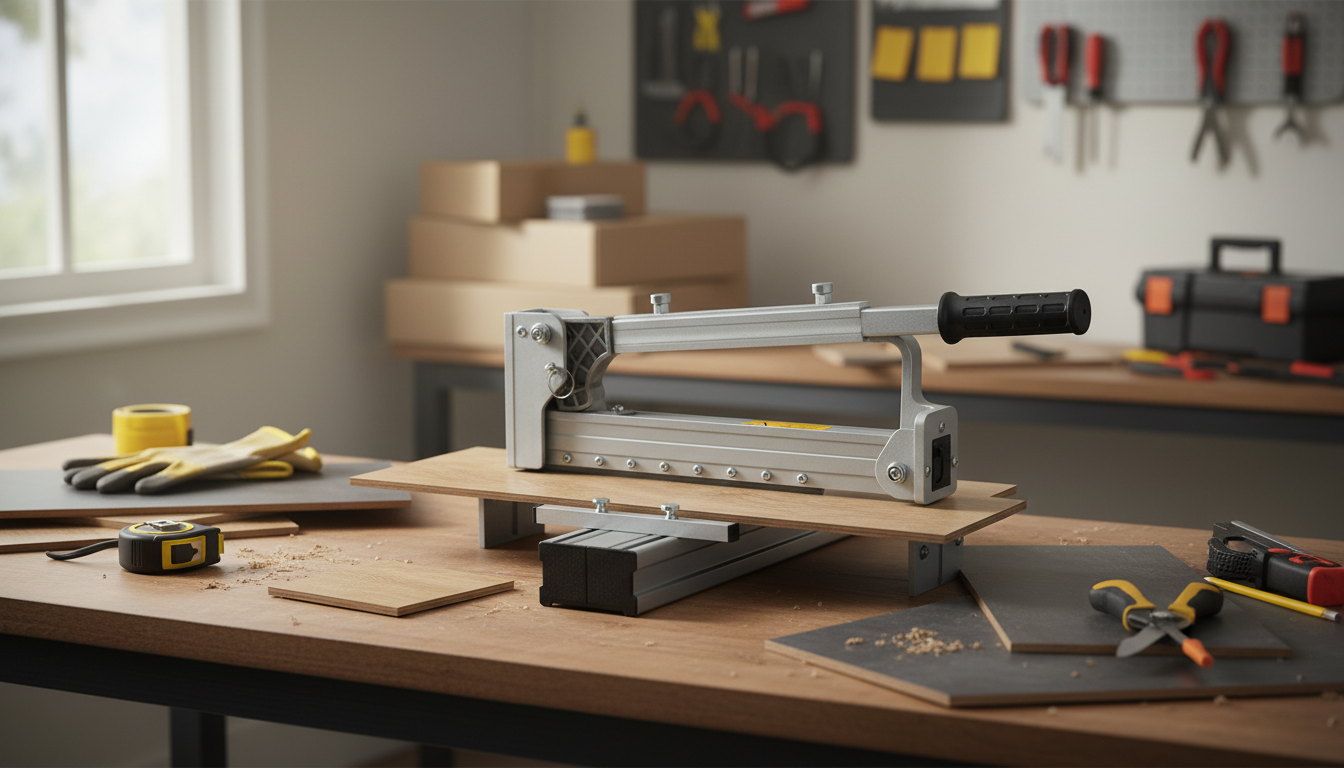
Clean Cuts Without the Dust: Why a 13-Inch Floor Cutter Belongs in Your Flooring Kit
A compact floor cutter can speed up laminate and vinyl installs by making fast, repeatable cuts with minimal mess. A 13-inch cutter is built for the everyday cuts that slow a job down—end trims, starter rows, and quick adjustments—without dragging a saw into the room. Below is a practical guide to what a 13-inch laminate and vinyl floor cutter does best, where a saw still wins, and how to get consistent, clean results.
What a 13-inch floor cutter is designed to do
A 13-inch floor cutter uses a lever-driven blade to shear flooring products with controlled pressure. Instead of grinding through material like a power saw, it slices downward, which typically means less airborne dust and less cleanup—especially helpful in finished spaces, apartments, and occupied homes.
- Makes straight, controlled cuts in many laminate planks and vinyl flooring products using a lever-driven blade.
- Reduces airborne dust compared with many saw-based cutting methods, which can be helpful indoors.
- Supports quick production work for repetitive cuts like end-trims, starter rows, and rip adjustments (within the tool’s width limit).
- Often easier to set up than a power saw: no cords needed for the cut itself, minimal cleanup, and typically quieter operation.
When it’s a better choice than a saw (and when it isn’t)
Floor cutters shine when the cut is straight and the piece fits the tool. They’re often the fastest way to knock out a stack of end cuts and keep installing without stopping to manage cords, dust collection, or outdoor cutting stations.
- Better for: straight cuts on planks/tiles that fit the cutter width; quick trimming; working in finished spaces; less dust and noise.
- Not ideal for: tight curves; detailed notches around irregular shapes; materials beyond the tool’s rated thickness/hardness; very wide boards beyond 13 inches.
- Workarounds for complex shapes: score-and-snap tools, jigsaws with the right blade, oscillating tools, or making a template cut on scrap first.
Cutting method comparison for common flooring tasks
| Task | Floor cutter | Miter/table saw | Jigsaw/oscillating tool |
|---|---|---|---|
| Straight end cuts on planks | Fast, clean, low dust | Accurate but dusty/noisy | Possible but slower; edge may need cleanup |
| Rip cuts (within width capacity) | Quick if the plank fits and material cooperates | Excellent control and repeatability | Slower; harder to keep perfectly straight |
| Notches around door jambs/vents | Limited (depends on cutter design) | Requires multiple passes or setup | Best option for detailed shapes |
| Curves and irregular cuts | Not suitable | Not suitable | Best option |
Material fit: laminate, LVP/LVT, and other resilient flooring
Not all planks behave the same under a cutter. Core density, thickness, and wear layer hardness can change how much force is needed and whether the edge stays crisp.
- Laminate: cutters can work well, but dense cores and thicker wear layers may require more force and can affect edge quality.
- Luxury vinyl plank/tile (LVP/LVT): many products cut cleanly; rigid-core vinyl may vary by brand and thickness.
- Engineered wood and bamboo: only if the cutter is explicitly rated for it; otherwise a saw may be safer and cleaner on the edge.
- Best practice: confirm the flooring product’s thickness and construction against the cutter’s stated capacity before committing to a full-room install.
For installation standards and best practices by material type, it helps to reference manufacturer instructions and industry resources such as RFCI installation resources for resilient flooring and NWFA guidance for wood-related products.
How to get cleaner, more accurate cuts
A floor cutter rewards consistent setup. Small habits—square marks, steady pressure, and good plank support—often make the difference between a cut that drops into place and a cut that needs touch-up.
Safety and jobsite setup
For general tool safety principles, see OSHA’s guidance on hand and power tools.
Maintenance that keeps cuts consistent
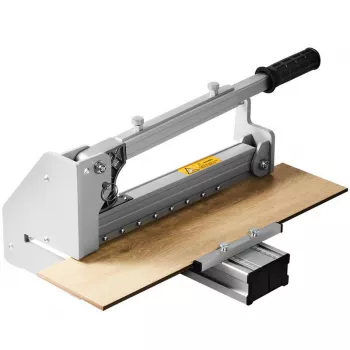
Product spotlight: 13-Inch Laminate and Vinyl Floor Cutter
13-Inch Laminate and Vinyl Floor Cutter
Quick checklist before buying or using
| Checkpoint | What to verify |
|---|---|
| Maximum cutting width | Plank width fits within 13 inches with room for alignment |
| Material compatibility | Laminate vs LVP/LVT vs rigid-core products |
| Thickness capacity | Flooring thickness is within the tool’s rating |
| Cut quality needs | Edge finish required for visible transitions or exposed cuts |
| Space and workflow | Stable surface available; room for handle movement |
More in-stock picks
- Double-Layer Foldable Pet Stroller with Portable Carrier for Dogs and Cats
- Boost Your AI Prompts for Better Output – Checklist (Digital Download)
FAQ
Can a 13-inch floor cutter handle rigid-core vinyl plank?
It depends on the plank’s thickness and core density as well as the cutter’s rated capacity. Check the flooring specs, test a scrap piece first, and use steady, even pressure to help keep the cut edge clean.
Does a floor cutter work for long rip cuts?
It can, but only when the plank fits within the cutter’s width and the cutter design supports straight ripping reliably. For wider boards or when you need the highest precision over longer lengths, a table saw or track saw is often a better choice.
How can chipping on laminate cuts be reduced?
Start with a sharp blade, keep the plank fully supported and square to the fence, and apply smooth, controlled pressure through the cut. Also follow the cutter’s guidance for which face should be up, and test your technique on offcuts before cutting full-length planks.














Leave a comment