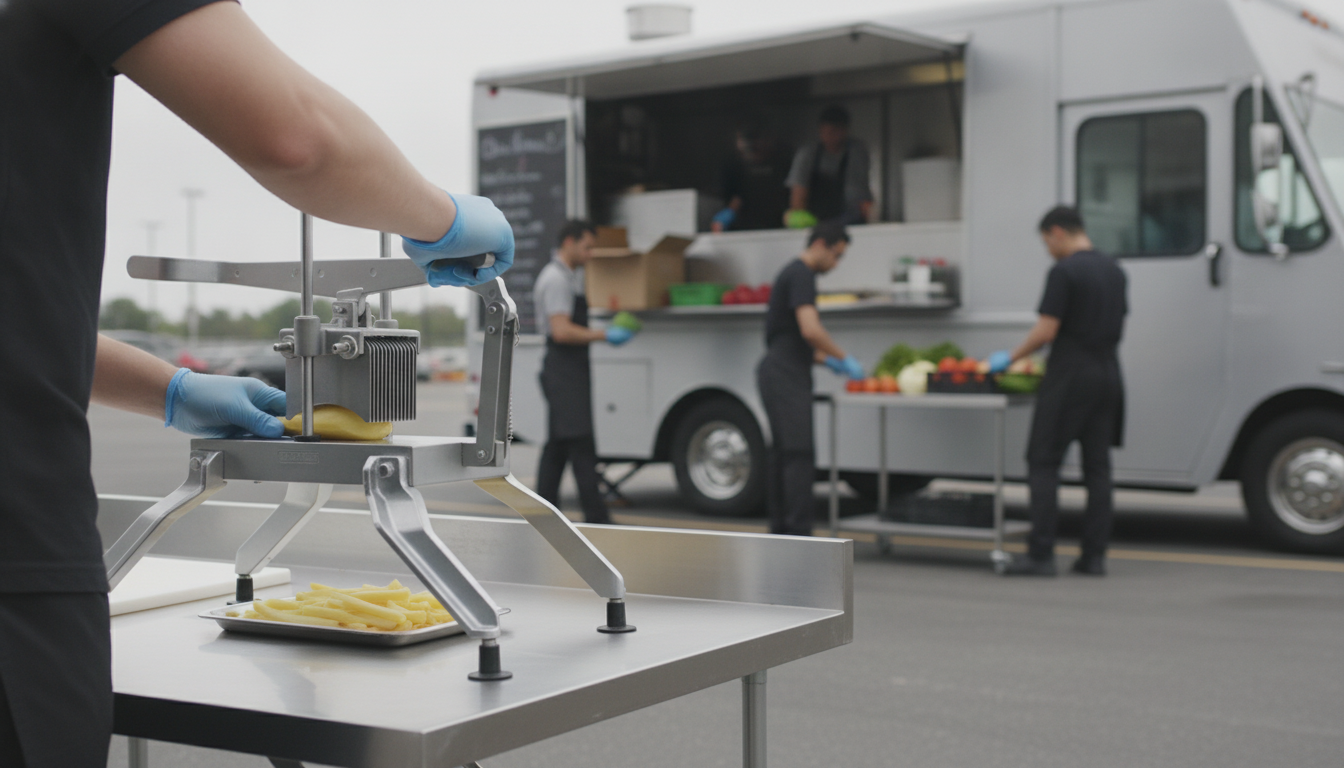
The right thickness setting comes down to what you’re serving, how fast you need to prep, and how well the slices hold up during cooking or storage. Start by choosing a target thickness based on the end dish, then fine-tune for texture and consistency.
For crisp, raw applications like salads, slaws, and sandwich toppings, thinner slices typically deliver better bite and a cleaner look. For sautéing, roasting, gratins, and casseroles, a slightly thicker cut helps pieces stay intact and cook more evenly without turning soft too quickly. If you’re slicing vegetables that will be pickled, aim for consistent medium-thin slices so brine penetrates uniformly.
Dense vegetables (potatoes, carrots, beets) tolerate thicker settings well and still cook through. High-water or delicate items (cucumbers, zucchini, tomatoes) often benefit from a thinner setting to prevent crushing and to keep portioning predictable. For fibrous produce (cabbage, onions), choose a thickness that avoids “stringy” cuts—often medium-thin—so slices separate cleanly.
Thicker slices generally move faster through high-volume prep because they’re less prone to tearing, and they may hold texture longer in hotel pans. Thinner slices create more surface area, which can mean faster oxidation (browning) and moisture loss; if you’re prepping far ahead, consider going slightly thicker or storing properly to maintain quality.
Dull blades can force you to use thicker settings just to avoid ragged edges. A sharp stainless blade supports cleaner thin slicing with less bruising and better uniformity. For a deeper look at blade choices and slicer performance, see this stainless blade commercial vegetable slicer guide.
Slice a small sample, then check: (1) uniformity (stack several slices to compare), (2) breakage or shredding, and (3) cook test (a quick blanch or sauté). Adjust one step at a time until the cut matches your desired texture and appearance.
Use a sharp, properly seated blade, keep the product snug in the chute with consistent pressure, and avoid mixing very different sizes in the same run. If the slicer has adjustable guides, set them to reduce wobble and recheck thickness calibration after cleaning.





Leave a comment