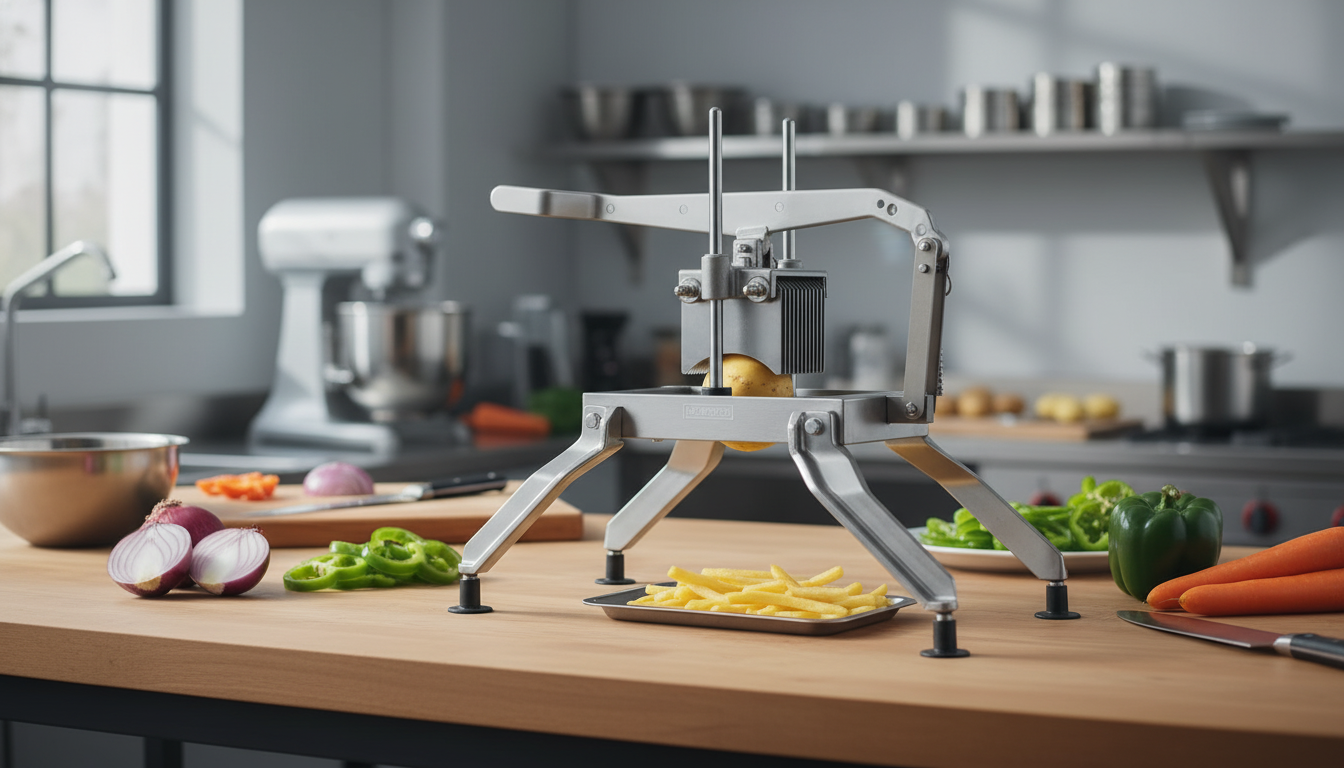
High-volume kitchens run on consistency: uniform slices cook evenly, plate cleanly, and prep faster. A commercial vegetable slicer built with stainless steel blades helps deliver repeatable cut quality while standing up to daily service demands. From chips and gratins to sandwich lines and salad bars, the right slicer turns time-consuming knife work into a standardized, efficient routine—without sacrificing the look and bite guests expect.
A commercial slicer is built to do one job extremely well: produce the same slice, over and over, at speed. That reliability shows up across the menu and across the shift.
Blades are the “wear item” that most directly affects output quality, safety, and downtime. Stainless steel is a practical choice for foodservice because it handles moisture, acids, and frequent cleaning better than many alternatives.
For sanitation routines and operator expectations, it helps to align your process with established guidance like the FDA Food Code and the USDA’s cleaning and sanitizing basics.
Speed only helps if the result is consistent. Thickness control is where a commercial slicer earns its place on the prep line—especially when different team members rotate through prep.
| Cut style | Best for | Notes |
|---|---|---|
| Thin slices | Chips, quick pickles, garnishes | Fast marination and crisp textures; watch for delicate produce |
| Medium slices | Salads, sandwiches, sauté prep | All-purpose thickness for day-to-day service |
| Thicker slices | Gratins, roasting trays, hearty vegetable sides | Holds structure during longer cook times |
| Consistent rounds/ovals | Cucumbers, zucchini, onions | Even shape improves plating and batch appearance |
In busy kitchens, the best equipment supports a repeatable workflow. A dedicated slicer can become the “standard station” for high-frequency items, reducing decision fatigue and keeping output predictable.
One practical approach is to assign a “menu thickness” for each core prep item (for example: sandwich cucumbers, salad onions, chip potatoes). Once the team knows those settings, prep becomes faster and easier to audit.
Slicers save time, but they also concentrate risk around the blade area. Simple habits and the right built-in features keep the station productive and incident-free.
Training is most effective when it’s visual and repeatable: show the correct feed angle, where hands should never go, and the exact steps for disassembly and reassembly before the first shift uses it.
Prep equipment only stays “commercial” if it can be cleaned thoroughly and on schedule. Vegetable starches and moisture can build up quickly, especially around joints, guides, and blade mounts.
| Item | Details |
|---|---|
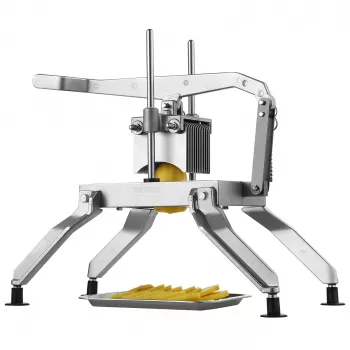
| Product | Commercial Vegetable Slicer with Stainless Steel Blades |
| Price | 193.32 USD |
| Availability | In stock |
Yes. Stainless steel is commonly used for food-contact tools because it resists corrosion and holds up to frequent washing when cleaned, rinsed, sanitized, and fully air-dried. Avoid harsh abrasion that can scratch surfaces and shorten edge life.
It depends on volume and what you slice, but many busy kitchens check blade condition weekly and service it as soon as cuts start tearing or more force is required. A routine inspection schedule helps prevent quality drift and mid-service slowdowns.
Firm produce like potatoes, cucumbers, onions, and zucchini usually slices consistently with minimal effort. Softer items like tomatoes and mushrooms need a sharper blade and gentler, guarded feeding to prevent bruising and uneven cuts.





Leave a comment