Spacecraft Wooden Cat Tower: Sisal Scratchers & Perches
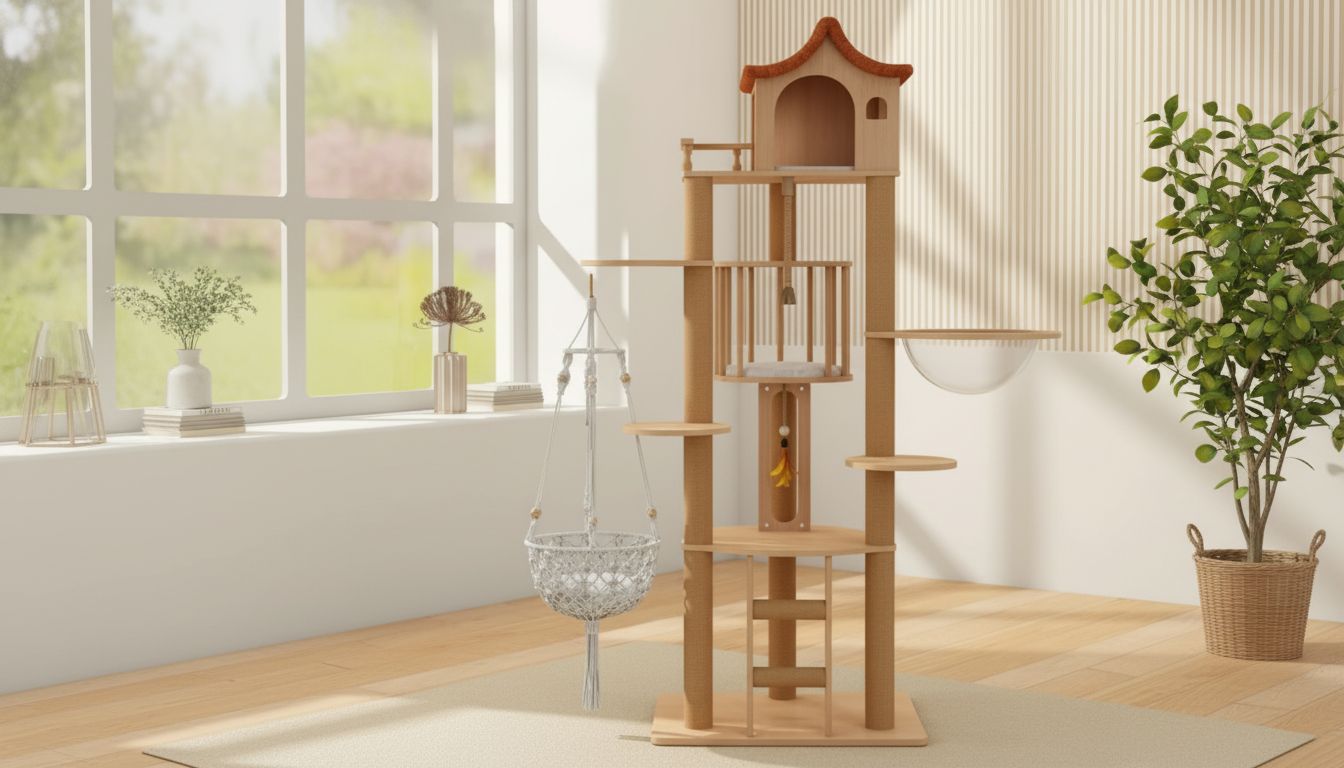
Large Wooden Cat Tower with Spacecraft Design and Sisal Scratchers
A sculptural wooden cat tower with a spacecraft-inspired silhouette can double as modern décor while giving cats vertical territory, scratch zones, and nap-ready perches. Sisal scratchers help redirect clawing away from furniture and support healthy scratching habits. The right layout also matters—especially for multi-cat homes or cats that like to climb, observe, and retreat.
What Makes a Spacecraft-Style Wooden Cat Tower Different
Spacecraft-style cat furniture tends to look intentional in a room, but the real advantage is how the shape organizes feline traffic. Instead of one straight “ladder” to the top, these designs often create clear destinations that cats can claim and rotate through.
- Spacecraft-inspired shapes tend to create distinct “zones” (lookout, lounge, hideaway), which can reduce cat-to-cat friction by offering multiple destinations.
- Wood construction often feels sturdier than lightweight particle board towers, supporting confident climbing and jumping.
- Curved or capsule-like platforms can give cats a semi-enclosed resting feel without fully blocking sightlines.
- Sisal scratchers placed along common routes (near entry points, between levels) encourage use because cats scratch where they pass most.
Key Features to Look For Before Buying
A large wooden cat tower can be an investment piece, so it helps to evaluate it like any other furniture: stability, surfaces, and ease of upkeep. For cats, small design details (like platform spacing and scratcher placement) can make the difference between daily use and total indifference.
- Stability: a wide, heavy base and balanced vertical profile to minimize wobble when a cat launches upward.
- Scratch coverage: multiple sisal-wrapped areas at different heights so both kittens and adult cats can scratch comfortably.
- Perch variety: at least one higher lookout and one lower resting area for cats that prefer different comfort levels.
- Edge comfort: smooth, rounded edges and supportive surfaces for longer naps.
- Maintenance: wipeable wooden surfaces and replaceable/refreshable scratching parts (when available) to extend lifespan.
- Space planning: measure the footprint and consider clearance around the tower for jumping arcs and traffic flow.
Quick checklist for a wooden tower with sisal scratchers
| What to check | Why it matters | Good sign |
|---|---|---|
| Base footprint and weight | Prevents tipping during climbs and jumps | Minimal wobble when pushed lightly |
| Sisal placement | Encourages daily scratching in high-traffic routes | Multiple scratch zones on posts/ramps |
| Platform spacing | Supports comfortable climbing for different ages | Step-like progression, not oversized gaps |
| Surface finish | Protects paws and simplifies cleaning | Smooth sealed wood, rounded corners |
| Resting options | Supports both perchers and hiders | Mix of open platforms and semi-enclosed nook |
How Cats Use Vertical Space (and Why It Helps at Home)
Indoor cats thrive when they can move through the home in layers rather than only across the floor. Vertical territory offers choice: a place to watch, a place to nap, and a place to “take five” when activity ramps up. Resources like the International Cat Care behavior guidance and the ASPCA’s cat behavior resources emphasize how environment and routine shape behavior—especially scratching, play, and conflict.
- Vertical territory provides choice and control—cats can observe, rest, and avoid conflict without leaving the room.
- Multi-level structures can reduce boredom by adding climbing routes and vantage points, especially for indoor cats.
- A dedicated scratch-and-climb zone helps shift energy away from curtains, chair backs, and carpeted stairs.
- Place the tower near a window for “cat TV,” but avoid spots where jumping could knock fragile items.
Sisal Scratchers: Placement, Texture, and Training Tips
Scratching is a normal, healthy behavior: it conditions claws, stretches the body, and leaves visual and scent signals. The goal isn’t to stop scratching—it’s to make the right surface the most appealing option.
Sizing and Layout for Kittens, Adults, and Multi-Cat Homes
Care, Cleaning, and Long-Term Durability
Wood-forward pieces tend to be easier to wipe down than fully carpeted towers, but any multi-level structure benefits from routine checks. The AAHA cat care resources are a helpful reference point for keeping a clean, low-stress home environment that supports health and good habits.
Product Spotlight: Large Wooden Cat Tower with Spacecraft Design and Sisal Scratchers
If you want a tower that reads like décor while still working hard for your cat, the Large Wooden Cat Tower with Spacecraft Design and Sisal Scratchers is built around that balance. Its spacecraft-inspired profile is meant to create multiple functional destinations—helpful for curious climbers, cats that love to observe from above, and households that want a statement piece rather than a purely utilitarian tower.
For cats that like to join you on errands, vet visits, or longer indoor outings (like pet-friendly events), pairing at-home enrichment with a travel option can round out your setup. The Double-Layer Foldable Pet Stroller with Portable Carrier for Dogs and Cats offers a contained way to bring a cat along while keeping them secure and comfortable.
FAQ
Will a wooden cat tower be more stable than a carpeted one?
Stability depends most on base width, overall weight, and how well the structure is balanced and assembled. Wood can add rigidity and a furniture-like feel, but a well-designed carpeted tower with a heavy base can also be very stable.
How long do sisal scratchers usually last?
It varies based on how intensely your cat scratches and how many cats share the tower. Replace or refresh when you see heavy fraying or bald spots, or when your cat loses interest even after redirection and rewards.
Where should a cat tower be placed for the most use?
Place it where your cat already spends time—often a living area—and/or near a window for a view. Keep clear space around it for safe jumping, and use gentle redirection so the tower becomes the default scratching and lounging spot.














Leave a comment