Habitats Tree Scratchers Tower: Placement, Safety & Care
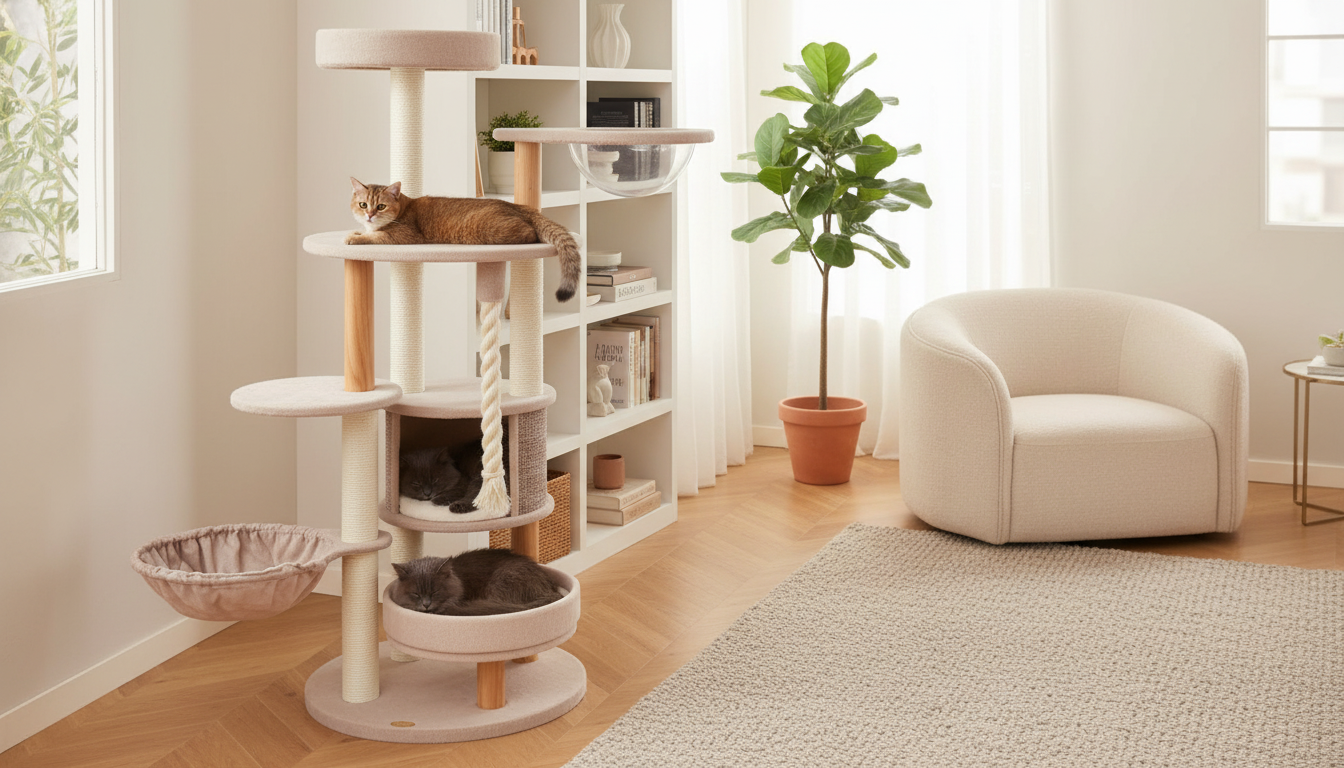
Habitats Tree Scratchers Tower: A Vertical Play and Scratching Hub for Cats
A tall scratching tower can change how cats use space at home—turning one footprint into a climbing route, a nail-care station, and a lookout point. The Habitats Tree Scratchers Tower is designed for cats that prefer vertical territory, daily scratching, and elevated rest. This guide covers what to look for in a tower-style scratcher, how to place it for maximum use, and how to keep it stable, clean, and inviting over time.
What a tower-style scratcher adds to a cat’s daily routine
Cats don’t just scratch to “be naughty.” Scratching supports nail shedding, stretches the shoulders and spine, and helps cats leave visual and scent marks that make a space feel familiar. A tower-style scratcher rolls multiple daily needs into one repeatable routine.
- Supports natural scratching needs by offering a dedicated surface cats can return to throughout the day.
- Encourages climbing and vertical movement, which can help burn indoor energy—especially for cats that sprint, pounce, or get the “zoomies.”
- Creates predictable resting and observation spots, helping cats feel secure in multi-room or busy households.
- Can reduce furniture scratching when positioned near common scratch targets and reinforced with positive cues (catnip, praise, treats).
For deeper background on why cats scratch and how to redirect it, the ASPCA’s overview of scratching behavior is a helpful reference: https://www.aspca.org/pet-care/cat-care/common-cat-behavior-issues/scratching.
Habitats Tree Scratchers Tower: highlights and best-fit households
Some cats are “floor cats,” but many are “air cats”—they relax more fully when they can perch above activity. A vertical tower is often a better match than a short scratch pad for cats that pace, climb shelving, or post up near windows.
- Best for cats that enjoy vertical territory: climbers, window-watchers, and cats that like to perch above foot traffic.
- Useful for indoor enrichment: combines scratching, climbing, and lounging in one structure, reducing the need for multiple separate items.
- Good option when floor space is limited: a vertical build can provide multiple levels without taking over a room.
- Consider household flow: placing the tower where cats already pass through helps it become part of the daily route rather than a forgotten corner item.
Quick suitability checklist
| Home/Cat Factor | Why It Matters | What to Do |
|---|---|---|
| Cat scratches furniture or rugs | A preferred scratch surface can redirect the habit | Place the tower beside the problem area for 2–3 weeks |
| Cat seeks high perches | Vertical territory boosts confidence and reduces stress | Position near a window or a calm wall space |
| Multi-cat home | Extra levels can reduce crowding and conflict | Choose placement that allows more than one approach path |
| Busy household or kids | Cats may avoid noisy areas | Keep at least one side away from heavy traffic |
| Senior cat or limited mobility | Tall climbs may be challenging | Add a step stool nearby or choose a spot that encourages partial use |
Placement tips that make cats actually use the tower
A scratching tower works best when it becomes part of a cat’s normal “patrol route.” If the tower is placed like décor instead of like a feline utility station, many cats will ignore it—even if it’s perfect.
- Start where the cat already spends time: near a favorite nap area, window, or the room where the family gathers.
- Use “scratch-path” logic: place it along common routes (near doorways or between rooms) so scratching becomes a convenient stop.
- Avoid dead zones: cats often ignore items tucked into storage-like corners; keep it visible and accessible.
- Make the first week easy: rub a small amount of catnip on the scratching surface (if the cat responds to catnip) and reward interaction.
- If furniture is the target: put the tower directly next to the scratched area first, then gradually move it a few inches per day if desired.
For cats that love window time, positioning the tower near a bright window can turn it into a daily destination—scratch, climb, settle, observe, repeat. For broader enrichment ideas that complement a climbing setup, see International Cat Care’s guidance on environmental needs: https://icatcare.org/advice/.
Stability and safety checks for tall scratchers
The fastest way to make a cat distrust a tall scratcher is letting it wobble during a jump or hard scratch session. A few quick checks can prevent “one bad experience” from becoming a long-term avoidance habit.
Keeping the scratching surfaces and lounging areas inviting
Making it work for multi-cat households
When a tower is the right choice—and when it isn’t
In-stock picks to support an active cat lifestyle
For vertical territory and daily nail care, the Habitats Tree Scratchers Tower is a dedicated home base. For cats that prefer a secure ride to vet visits or longer outings, pairing home enrichment with a travel setup like the Double-Layer Foldable Pet Stroller with Portable Carrier for Dogs and Cats can make transitions smoother—especially for anxious or easily overstimulated cats.
FAQ
How long does it take a cat to start using a new scratching tower?
Many cats investigate within a day, but consistent use can take 1–2 weeks. Adoption improves when the tower is placed near existing scratch targets and any interaction is rewarded.
Where should a tall cat scratching tower be placed for best results?
Put it where the cat already spends time and along natural walking routes. If furniture scratching is the issue, start by placing the tower directly next to the scratched area before moving it gradually.
How can a tall scratching tower be made safer on smooth floors?
Keep it on a level surface, re-tighten hardware after the first few days of use, and add a non-slip mat under the base to reduce sliding and wobble—especially for cats that launch onto upper levels.














Leave a comment