Budgeting Toolkit System: Plan, Track, Review, Improve

Why a “Toolkit” Budget Works Better Than a Single Sheet
A budget is most helpful when it’s not just a set of limits, but a repeatable system: plan what matters, track what actually happens, review without judgment, and improve one small thing at a time. The Empowered Budgeting Toolkit is built around that rhythm, combining planning pages, an Excel workflow, saving structures, wealth-building prompts, and guided affirmations to make the monthly routine feel clear and doable—especially when life is busy or expenses are unpredictable.
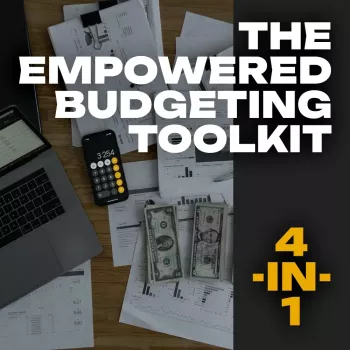
If you want a guided setup instead of reinventing your categories every month, The Empowered Budgeting Toolkit 4-in-1 Bundle brings everything into one system you can return to consistently.
What’s Included in the 4-in-1 Bundle
- Budget planner components designed to map income, bills, variable spending, and sinking funds into a single monthly view.
- Excel guide that turns recurring tracking into a faster routine with formulas, categories, and review checkpoints.
- Monthly expense and savings structures to separate essentials, goals, and flexible spending without losing visibility.
- Wealth-building strategy prompts for priorities like emergency funds, debt payoff, investing readiness, and goal timelines.
- Guided affirmations for wealth to reinforce consistency, reduce avoidance, and support a calm money mindset.
Who This Toolkit Fits Best
- Anyone who wants a step-by-step budgeting routine rather than starting from a blank spreadsheet every month.
- People rebuilding financial confidence after inconsistent tracking, overspending, or lifestyle changes.
- Households balancing fixed bills with irregular expenses (gifts, car repairs, annual subscriptions, medical costs).
- Goal-focused planners working toward savings milestones, debt reduction, or a more intentional spending plan.
- Spreadsheet users who want a guided setup that keeps the system simple enough to maintain.
If your budget needs to flex around a major life transition—like re-entering the workforce—pairing a money system with a practical transition plan can reduce stress. Consider Returning to Work After Motherhood: Your Ultimate Guide for Stay-at-Home Moms as a helpful companion when income, childcare, and schedules are changing.
How to Set Up Your First Month (15–30 Minutes)
- Choose a starting date and list predictable income sources (paychecks, side income, refunds that are already scheduled).
- Add fixed expenses first (rent/mortgage, insurance, minimum debt payments, subscriptions, childcare).
- Estimate variable categories using the last 1–3 months of statements (groceries, fuel, dining, personal spending).
- Create 3–6 sinking funds for irregular expenses (car maintenance, holidays, annual fees, medical, travel).
- Assign an initial savings target, then adjust variable spending until the month balances.
- Schedule two short check-ins: mid-month to correct course and end-of-month to learn what to change next.
For paycheck planning, it also helps to confirm your withholding so your “expected take-home” is realistic. The IRS Withholding Estimator can support cleaner numbers at the start of the month.
A Simple Monthly Flow: Plan → Track → Review → Improve
- Plan: set category targets that reflect real life, including irregular expenses and upcoming events.
- Track: log spending quickly and consistently; accuracy improves with repetition, not perfection.
- Review: compare planned vs. actual spending to identify the top 1–2 categories driving the gap.
- Improve: adjust next month’s targets based on patterns and choose one habit upgrade (meal plan, subscription audit, cash envelope, spending cap alerts).
- Keep decisions small: one meaningful change per month tends to stick better than a full reset.
If you’re building a new budgeting habit, it can be helpful to follow a simple framework and keep the first month focused on consistency. The Consumer Financial Protection Bureau (CFPB) budgeting resources are a trustworthy reference for basic budgeting principles and next steps.
Monthly Budget Categories That Prevent Surprise Overspending
The category structure matters because it prevents “mystery” spending from quietly turning into debt. A balanced setup separates the costs that keep you stable from the costs that keep you motivated.
| Category Group | Examples | Monthly Rule of Thumb |
|---|---|---|
| Essentials | Rent, utilities, insurance, minimum debt payments | Fund first; reduce only with long-term changes |
| True Expenses (Sinking Funds) | Car repairs, annual fees, gifts, medical, travel | Contribute monthly to avoid last-minute credit use |
| Lifestyle | Dining out, hobbies, shopping, entertainment | Set a cap that protects goals and essentials |
| Goals | Emergency fund, extra debt payments, investing | Automate when possible; increase after each review |
| Buffer | Unexpected small costs | Small line item to keep the plan realistic |
Using the Excel Guide Without Getting Overwhelmed
Savings and Wealth Strategies That Pair Well With This System
If debt payoff is a primary goal, the Federal Trade Commission (FTC) guidance on managing debt offers straightforward, consumer-focused steps to consider alongside your monthly plan.
Guided Affirmations for Wealth as a Consistency Tool
Common Sticking Points and Quick Fixes
For a structured, all-in-one approach that supports planning, tracking, savings, and mindset in one place, explore The Empowered Budgeting Toolkit 4-in-1 Bundle.
FAQ
Is this better for beginners or experienced budgeters?
It works well for both. Beginners can start with fewer categories and a simple monthly plan, while experienced budgeters can lean on the Excel structure, sinking funds, and review cadence to refine results over time.
How long does monthly maintenance usually take?
The first setup month takes the longest, but ongoing tracking can be kept to short check-ins (a few minutes daily or a longer session twice weekly) plus a brief end-of-month review.
Do guided affirmations actually help with budgeting?
They can help with consistency by reducing avoidance and pairing a positive cue with a concrete action, like logging transactions or reviewing one category. They tend to work best when attached to a simple, repeatable routine.















Leave a comment