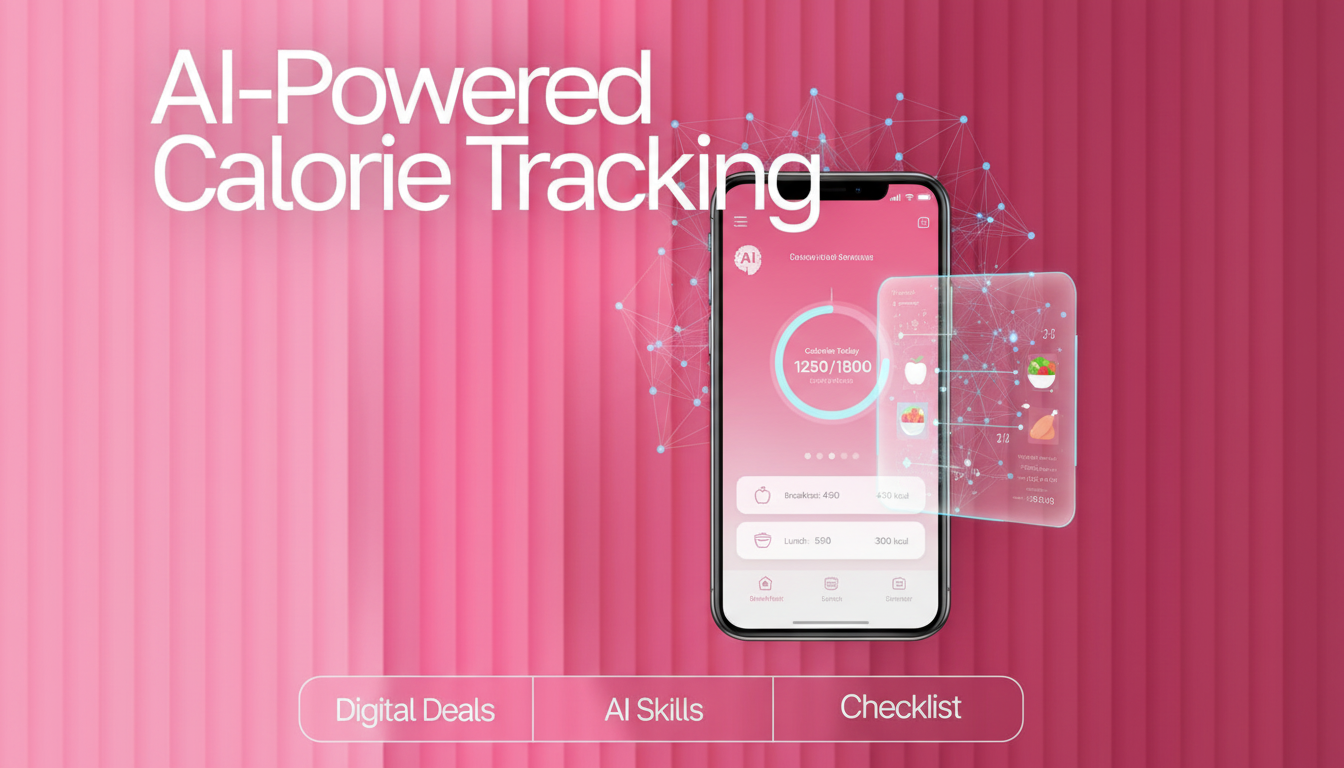
AI-Powered Calorie Tracking Checklist: A Daily Nutrition Companion That Keeps Logging Simple
Consistent calorie tracking works best when it feels quick, repeatable, and flexible enough for real life. An AI-assisted checklist approach helps turn meals, snacks, and drinks into a clear daily flow—so totals, patterns, and adjustments are easier to spot without getting lost in details.
What an AI-assisted calorie checklist actually does
Instead of relying on memory (and hoping everything gets logged), a checklist creates predictable “checkpoints” across the day. AI support then fills in the common gaps—especially the small add-ons that quietly change the total.
- Organizes the day into predictable checkpoints (morning, midday, afternoon, evening) to reduce missed entries
- Uses guided prompts to capture common “forgotten calories” (cooking oils, dressings, bites/tastes, beverages)
- Encourages quick estimates when exact numbers aren’t available, then refines later if needed
- Pairs intake logging with simple context notes (hunger, energy, cravings, workout) to explain patterns
- Keeps the process lightweight so it can be sustained beyond the first week
Checklist vs. typical logging: what changes day to day
| Feature |
Typical app-only logging |
AI-assisted checklist style |
| Structure |
Log whenever remembered |
Follow set checkpoints to avoid gaps |
| Forgotten items |
Often missed (oils, sauces, drinks) |
Prompts to capture common omissions |
| Speed |
Fast for barcodes, slow for homemade meals |
Fast entry first, refine if needed |
| Learning |
Numbers without context |
Notes help connect habits to outcomes |
| Consistency |
Drops when busy |
Minimal steps designed for busy days |
Daily workflow: a practical routine that takes minutes
A checklist works best when it’s the same simple rhythm each day. The goal is to capture enough accuracy to be useful—without turning meals into math class.
- Start-of-day setup: confirm the day’s goal (maintenance, mild deficit, performance) and planned meals
- Meal capture: record what was eaten using short descriptions first; add quantities if known
- Smart reminders: schedule two quick “catch-up” moments for unlogged bites, drinks, and add-ons
- End-of-day review: check the biggest drivers of total calories (dense snacks, liquid calories, large portions)
- Close-out: identify one small change for tomorrow (swap, portion adjustment, or timing tweak)
Two “catch-up” check-ins that prevent most tracking gaps
Pick two times that naturally fit your schedule—often mid-afternoon and after dinner. Use them to ask: “Did I have any coffee extras, cooking oils, samples while cooking, handfuls of snacks, or drinks I didn’t log?” This is where the checklist shines, because it’s built to catch what memory misses.
How AI helps without turning food tracking into a full-time job
AI support is most helpful when it reduces friction: fewer decisions, fewer searches, and less second-guessing. It’s not about perfection—it’s about making the process repeatable.
- Portion support: provides rough portion-to-calorie comparisons (e.g., handfuls, tablespoons, palm-size servings)
- Meal template reuse: saves repeated breakfasts/lunches to reduce daily decision fatigue
- Pattern detection: flags recurring high-calorie moments (late-night snacking, weekend drinks, “healthy” extras)
- Balanced day nudges: suggests distributing calories across meals to prevent end-of-day overcorrection
- Progress-friendly language: focuses on repeatable actions rather than perfection in numbers
When you want credible nutrition references for estimating and checking foods, sources like USDA FoodData Central can help ground estimates in real data.
Common tracking pitfalls and quick fixes
Most tracking frustrations come from a few predictable places. Fixing them usually takes defaults—not more willpower.
- Under-logging add-ons: create a default entry for oils, spreads, condiments, and coffee extras
- All-or-nothing days: use “good enough” estimates on chaotic days instead of skipping entirely
- Restaurant meals: log the main dish plus a conservative buffer when nutrition info is unclear
- Protein and fiber gaps: note them alongside calories to support fullness and steadier energy
- Weekend drift: keep the same checkpoint routine even if meal timing changes
For broad healthy-eating guardrails that work alongside calorie awareness, the Dietary Guidelines for Americans (2020–2025) offers practical recommendations on overall patterns—not just numbers.
Making the checklist match different goals
The same checklist framework can support very different outcomes. The difference is which prompts you prioritize and what you review at the end of the day.
- Fat loss: prioritize consistency, include a review prompt for liquid calories and snacks
- Muscle gain: track calorie surplus plus protein timing and pre/post-workout meals
- Maintenance: focus on trend awareness, portion stability, and weekly averages
- Busy schedules: use templates and the two daily “catch-up” check-ins as non-negotiables
- Mindful approach: add a short note on hunger/fullness to prevent overly rigid tracking
If weight management is part of the goal, the NIH NIDDK guidance on healthy eating and weight management is a helpful, evidence-based resource for staying focused on sustainable habits.
A simple way to start (and actually continue)
Recommended digital guides (in stock)
FAQ
Is it okay to estimate calories instead of measuring everything?
Yes—consistent estimates are often more useful than perfect numbers that are hard to sustain. Use quick portion guides, keep a small buffer for unknowns, and refine only the meals that most affect totals.
How long does daily tracking take with a checklist approach?
Typically a few minutes spread across the day: quick entries at meals plus two short catch-up check-ins. Templates and repeated meals reduce time further after the first week.
What should be tracked besides calories?
Include at least one context signal (hunger/fullness, energy, cravings, training) and a couple of nutrition anchors (protein, fiber, water) to explain why some days feel easier or harder.
Recommended for you





Leave a comment