2-Tier Foldable Pet Stroller + Detachable Carrier
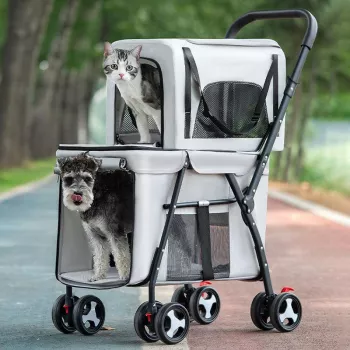
Double-Layer Foldable Pet Stroller with Portable Carrier for Dogs and Cats
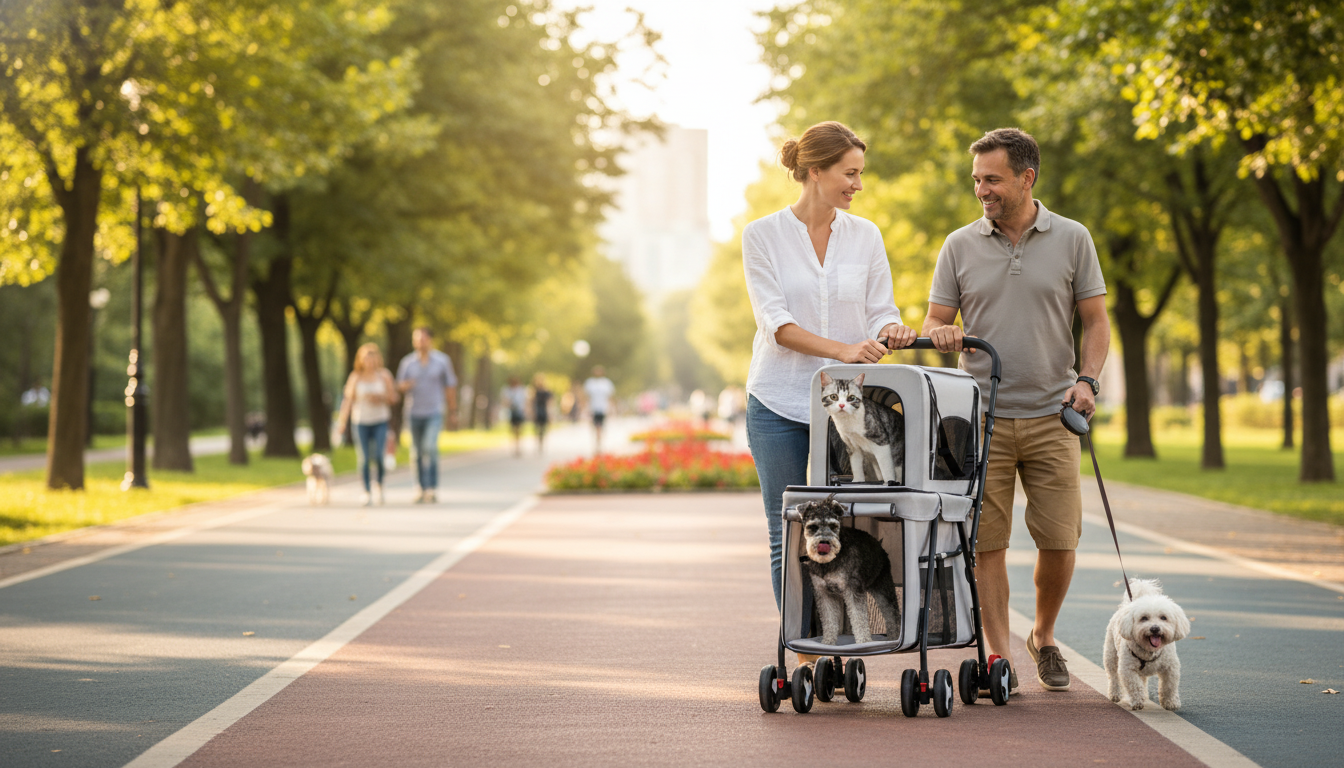
A double-layer stroller with a removable carrier can make everyday outings easier for pets who get tired quickly, are recovering, or simply prefer a smoother ride. The two-compartment layout helps pets stay comfortable with their own space, while the portable carrier adds a practical “pick up and go” option for tight indoor spots, stairs, and quick transfers.
What a double-layer stroller with a portable carrier does best
- Provides two separate riding areas so pets can have their own space during walks and errands.
- Adds flexibility with a detachable carrier for quick transitions from stroller to car or indoor spaces.
- Helps reduce stress for pets that dislike crowded sidewalks, loud environments, or long distances.
- Supports daily routines like vet visits, grooming appointments, travel days, and outdoor cafes.
At-a-glance features that matter on real outings
On paper, many pet strollers sound similar. In day-to-day use, comfort, stability, and ease of handling are what you notice first—especially with older pets, skittish pets, or two animals riding at once.
- Separate compartments can reduce jostling and minimize pet-to-pet friction.
- A foldable frame helps with storage in apartments, closets, and car trunks.
- Breathable mesh panels improve airflow and visibility while helping keep pets secure.
- Smooth-rolling wheels and stable handling reduce vibration for older or sensitive pets.
- A carrier option is useful when a stroller cannot fit inside tight spaces.
Quick feature checklist
| Feature | Why it matters | What to check |
|---|---|---|
| Double-layer cabins | Keeps pets separated and comfortable | Independent access, sturdy base, easy-to-clean lining |
| Portable carrier | Simplifies transfers and short carry moments | Secure closures, ventilation, comfortable handle/strap |
| Foldable frame | Easier storage and transport | One-hand fold, compact size, latch to keep closed |
| Mesh ventilation | Comfort and temperature management | Multiple mesh panels, durable stitching, shade coverage |
| Safety tethers and zippers | Prevents jumping out | Strong clips, smooth zippers, reliable locks |
Who benefits most from a two-compartment design
- Small dogs or cats that tire on longer walks but still enjoy being outdoors.
- Senior pets needing smoother rides with fewer jolts from uneven pavement.
- Post-surgery or recovery periods when movement needs to be limited (follow veterinary guidance).
- Multi-pet households that prefer separation for comfort, safety, or different temperaments.
- Pets that get anxious around crowds and do better with a protected, partially enclosed space.
Even in a one-pet home, a double-layer stroller can be useful: one compartment can hold the pet while the other carries a light blanket, a small bag of supplies, or a jacket—keeping hands free and routines smoother.
Comfort and safety setup before the first walk
- Measure pets and confirm cabin dimensions and weight capacity are appropriate for each compartment.
- Introduce the stroller indoors first: let pets explore, add a familiar blanket, and reward calm behavior.
- Use built-in tethers/harness attachment points to reduce the chance of sudden jumping (avoid attaching to collars).
- Keep ventilation open in warm weather and avoid direct sun exposure for extended periods.
- Start with short routes to confirm steering, braking, and pet comfort.
For hot days, prioritize shade and airflow and plan shorter loops. Heat risk can climb faster than expected in enclosed spaces, even with mesh—review warm-weather safety basics from the AKC’s guidance on heatstroke in dogs and adjust outing times accordingly.
Using the portable carrier for smooth transitions
- Practice attaching/detaching the carrier at home so changes are quick and calm outside.
- For car travel, secure the carrier according to the manufacturer’s instructions and keep it stable and level.
- Use the carrier for places where wheels are inconvenient: stairs, small shops, narrow entries, or elevators.
- Keep essentials together: wipes, a small water bottle, a collapsible bowl, and waste bags.
When traveling, the goal is simple: stable, ventilated, and securely closed. The AVMA’s pet travel safety tips are a helpful reference for planning car rides, stops, and safe handling.
Handling, folding, and day-to-day practicality
- Choose routes that avoid steep curbs and heavy gravel to keep rides smoother.
- Engage brakes whenever stopped, especially on slopes or while loading pets.
- Fold and unfold on a flat surface; double-check the lock before placing pets inside.
- Store in a dry area and wipe wheels after rainy walks to reduce odor and grime buildup.
If two pets are riding, keep the stroller balanced: load the calmer pet first, then the second, and confirm both are clipped to harness tethers (not collars). On busy sidewalks, a partially closed mesh panel can reduce visual overstimulation without cutting off airflow.
Care and cleaning to keep it fresh
For general wellness routines that support comfortable outings—hydration, stress reduction, and safe handling—review the ASPCA’s general pet care guidance and adapt to your pet’s needs and temperament.
Product option in stock
- Double-Layer Foldable Pet Stroller with Portable Carrier for Dogs and Cats: designed for flexible outings with separate compartments and a carry option when wheels are not practical.
- Best suited for small pets who benefit from separation, smoother rides, and easier transfers.
More from our store
FAQ
Can two pets ride in a double-layer stroller at the same time?
Yes when each compartment’s size and weight limits are respected. Keep pets separated as designed, attach each pet to a harness tether, and monitor comfort and temperature throughout the outing.
Is a pet stroller safe for an anxious dog or cat?
Often yes with gradual introduction. Start indoors, keep ventilation open, secure your pet with a harness tether, and begin with short, quiet routes before trying busier environments.
How should the portable carrier be used during travel?
Follow the product instructions, keep the carrier stable and well-ventilated, and make sure closures stay securely latched. Avoid leaving pets in hot cars or in direct sun for extended periods.














Leave a comment