×
Back to menu
HomeBlogBlog1200W 6-Speed Burnishing Polisher for Metal Finishing

1200W 6-Speed Burnishing Polisher for Metal Finishing

1200W 6-Speed Burnishing Polisher for Metal Finishing

1200W Burnishing Polishing Machine: 6-Speed Surface Conditioning Tool for Metal, Stainless, and More

A variable-speed burnishing and polishing machine is built for refining surfaces—blending scratches, brightening metals, and preparing material for finishing. With a 1200W motor and six speed settings, this type of surface conditioning tool helps match RPM to the material and abrasive, improving control, finish consistency, and heat management across stainless steel, aluminum, brass, and coated parts.

What a burnishing polishing machine does (and when it’s the right tool)

Burnishing and polishing are about surface refinement. Instead of aggressively removing material, the goal is to smooth, blend, and brighten so the finished part looks uniform under shop lighting and up close.

  • Burnishing and polishing focus on smoothing and brightening a surface rather than removing large amounts of material.
  • Surface conditioning wheels and drums are commonly used for blending welds, removing light oxidation, and creating satin or brushed finishes.
  • Best-fit tasks: stainless railing refinishing, sheet metal finishing, pipe polishing, edge blending, and uniform grain creation.
  • Not the best fit: heavy stock removal, deep gouge grinding, or cutting operations—use an angle grinder or belt grinder first, then condition and polish.

Why speed control matters for surface conditioning

Variable speed is what turns a single tool into a repeatable finishing system. The right RPM helps avoid heat tint on stainless, loading on aluminum, and random swirls that show up after a “final pass.”

  • Lower speeds help reduce heat buildup, which is critical for thin metal, coatings, and plastics near metal trim.
  • Higher speeds can increase gloss and cutting action, but can also risk swirl marks or surface overheating if pressure is too high.
  • Matching speed to the abrasive type (non-woven, flap wheel, polishing wheel) improves finish uniformity and reduces loading.
  • A six-speed range supports step-by-step finishing: blend → refine → brighten → final polish without switching tools.

Speed and finish outcomes (practical starting points)

Task Typical speed approach Abrasive / attachment Notes for consistency
Blend light scratches or weld haze Low to mid Coarse non-woven conditioning wheel Keep tool moving; avoid dwelling on edges
Create a satin/brushed grain Mid Medium non-woven wheel or flap wheel Work in one direction; overlap passes evenly
Brighten stainless or aluminum Mid to high Fine conditioning wheel Use lighter pressure to avoid haze
Final shine / polishing High (as material allows) Polishing wheel + compound (if applicable) Clean surface between steps to prevent grit carryover

Key features to look for in a 1200W 6-speed machine

Surface conditioning often looks “simple” until a finish needs to match across multiple parts. That’s where the right machine features pay off—especially stable power delivery and predictable speed steps.

  • Motor power (1200W class): supports steady rotation under load for consistent finish quality.
  • Six speed settings: provides control across different metals, abrasives, and finishing stages.
  • Ergonomics and stability: comfortable grip positions and balanced weight reduce fatigue on long passes.
  • Attachment compatibility: confirm the wheel/drum type and diameter range supported before stocking consumables.
  • Maintenance basics: inspect brushes (if applicable), keep vents clear, and regularly check fasteners and guards.

How to get a clean, repeatable finish (process that avoids rework)

A consistent finish is usually the result of a consistent process. Small habits—like cleaning between steps and keeping pressure even—often matter more than chasing higher speed.

  • Start with the right prep: degrease and remove embedded grit so abrasives don’t smear contaminants into the surface.
  • Work from coarser to finer in distinct steps; skipping too quickly often leaves ghost scratches that show after polishing.
  • Use consistent pressure and overlapping passes; let the abrasive do the work to reduce heat and swirl marks.
  • Change direction strategically: for a brushed look, keep a single direction; for blending, crosshatch lightly before final passes.
  • Clean between steps: wipe down and change gloves or rags to prevent coarse particles from contaminating a fine finishing stage.

Safety and surface protection essentials

Finishing tools can throw fine particles and generate heat quickly, especially when polishing edges and corners. Use protective gear and set up the work so the tool can run smoothly without grabbing.

For additional safety guidance, review OSHA’s requirements for hand and power tools (OSHA – Hand and Power Tools) and NIOSH recommendations on selecting respiratory protection (NIOSH – Respiratory Protection Guidance).

Product spotlight: 1200W Burnishing Polishing Machine – 6-Speed Surface Conditioning Tool

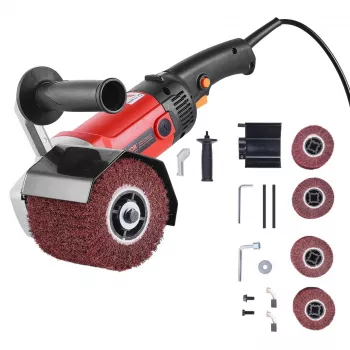
For shops and job sites that need controlled blending, refining, and brightening on common metals, the 1200W Burnishing Polishing Machine – 6-Speed Surface Conditioning Tool is built around a practical combination: a 1200W motor and six selectable speed settings.

At-a-glance details

Item Value
Product 1200W Burnishing Polishing Machine – 6-Speed Surface Conditioning Tool
Power 1200W
Speed settings 6
Availability In stock
Price 102.17 USD

Common use cases by material

Also in stock

FAQ

What speed should be used for stainless steel finishing?

Start low to mid for blending and satin finishes, then increase gradually for brightening and polishing. Keep the tool moving and use lighter pressure to reduce the risk of heat tinting.

Can a surface conditioning tool remove deep scratches?

It can blend light scratches and surface haze, but deep scratches typically need initial sanding or grinding first. After the defect is reduced, conditioning and polishing steps can restore a uniform finish.

Why does the finish look streaky or uneven?

Streaks usually come from inconsistent pressure, pausing in one spot, a contaminated abrasive, or skipping finishing steps too quickly. Reset by cleaning the surface, switching to a fresh wheel, and making steady, overlapping passes.

Leave a comment

Why arcanias.com?

Uncompromised Quality
Experience enduring elegance and durability with our premium collection
Curated Selection
Discover exceptional products for your refined lifestyle in our handpicked collection
Exclusive Deals
Access special savings on luxurious items, elevating your experience for less
EXPRESS DELIVERY
FREE RETURNS
EXCEPTIONAL CUSTOMER SERVICE
SAFE PAYMENTS
Top

Shopping cart

×