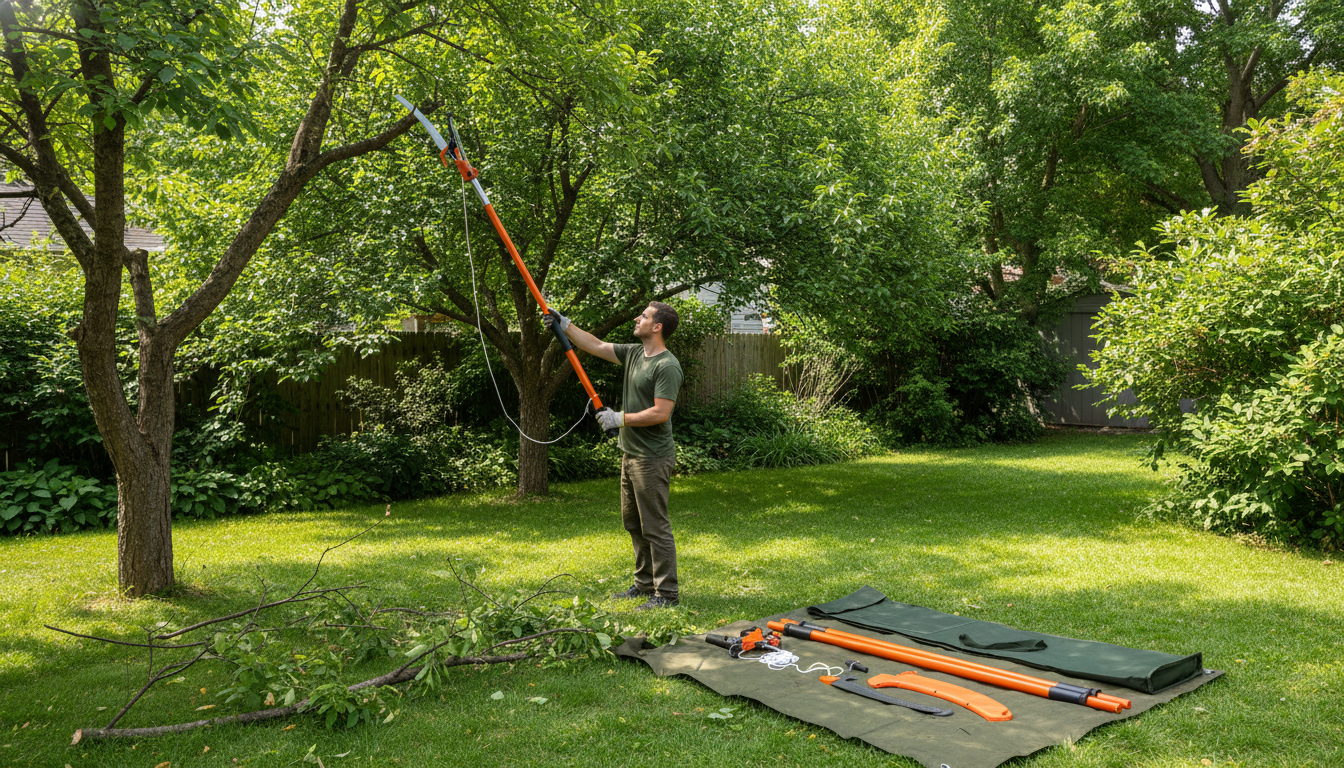
A long-reach manual pole saw makes it possible to prune and cut overhead limbs from the ground with better control than ladder work for many routine tasks. This guide breaks down how a 27-foot extendable manual pole saw is typically built, what it handles well, how to use it safely, and how to keep it cutting cleanly through the season.
A 27-foot manual pole saw is built for overhead trimming without needing to climb for many common yard jobs. It’s especially useful for routine maintenance like removing small-to-medium limbs, clearing deadwood, and thinning crowded areas so light and air can move through the canopy.
It’s not a replacement for a chainsaw—or for professional climbing and rigging—when branches are large, heavy, near roofs, or close to utility lines. Manual operation trades raw speed for control, quieter work, and simpler maintenance.
Real-world performance depends on rigidity more than maximum stated length. A pole that flexes heavily at full extension is harder to aim and more likely to bind the blade mid-cut.
Clamps or twist locks should hold firmly without creeping under load. Before any overhead work, confirm each lock is fully seated and aligned so a section can’t collapse while you’re pulling a stroke.
Tooth pattern and blade length affect how smoothly the saw tracks through green versus dry wood. A clean, sharp blade reduces effort, helps keep the cut on line, and lowers the chances of sudden binding.
Some pole tools include a lopper head for quick, clean cuts on smaller branches—often faster than sawing when the limb is within the lopper’s practical capacity.
Multiple hand positions and a comfortable grip matter more than they sound like. Overhead trimming can involve long holds and repeated pulls, so better balance reduces fatigue and improves accuracy.
Before buying, think through four basics: the working height you actually need, the typical branch diameter you trim, where the tool will be stored, and whether the pole will feel manageable for your height and upper-body strength. Treat maximum reach as an occasional peak; day-to-day efficiency comes from stability and control.
| Feature | Why it matters | What to verify before use |
|---|---|---|
| Extension range | Determines working height from the ground | Locks fully engaged; no section wobble |
| Locking mechanism | Prevents sudden collapse during a cut | Clamps/twist locks are tight and aligned |
| Blade condition | Sharp teeth cut faster and safer | No bent blade; teeth clean and sharp |
| Pole straightness | Improves accuracy and reduces binding | No cracks; joints seat flush |
| Work zone setup | Reduces strike and trip hazards | Clear fall path; bystanders kept back |
Avoid over-pruning in one session. Removing too much canopy at once can stress many species and may lead to weak regrowth. Timing also matters—many trees respond best to pruning in specific seasons, and flowering trees can lose next year’s blooms if cut at the wrong time. For general guidance, consult resources like the University of Florida IFAS Extension pruning guides and recognized industry standards such as ANSI A300 (overview).
Keep both hands on the pole during the cut and reposition your feet instead of reaching past your comfortable range. Never use a pole saw near energized power lines—treat all overhead lines as live and maintain significant clearance. For broader jobsite safety reminders, see OSHA’s general guidance related to landscaping and tree-care hazards. Also choose conditions wisely: avoid high winds, slick ground, and low visibility.
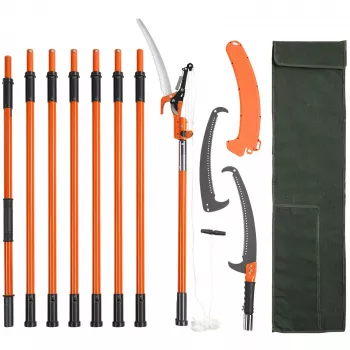
If you’re outfitting for typical residential trimming heights and want a simpler, lower-maintenance tool, a 27FT Extendable Manual Pole Saw can cover a wide range of overhead cleanup while staying straightforward to store and maintain. Before scheduling a full pruning day, confirm what attachments are included, whether replacement blades are available, and any recommended branch diameter limits.
Most users get the best results on small-to-medium limbs, with the practical limit depending on wood hardness, how high you’re extended, and how well you can control the pole. If the branch is thick or heavy, cutting it in sections (or switching to a different tool) is often safer and faster than forcing one long cut.
Working from the ground can reduce fall risk compared to ladder positioning for many routine cuts, but overhead cutting still has serious hazards. Use an exclusion zone, wear appropriate protection, keep stable footing, and avoid any work near power lines.
Keep the pole as stable as possible, start with shorter controlled strokes, and adjust the cutting angle if the kerf begins to close. For heavier limbs, remove weight in smaller sections and use a three-cut method to reduce tearing and kerf pinch.





Leave a comment