Wooden Dollhouse: 29 Accessories + Customizable Lights
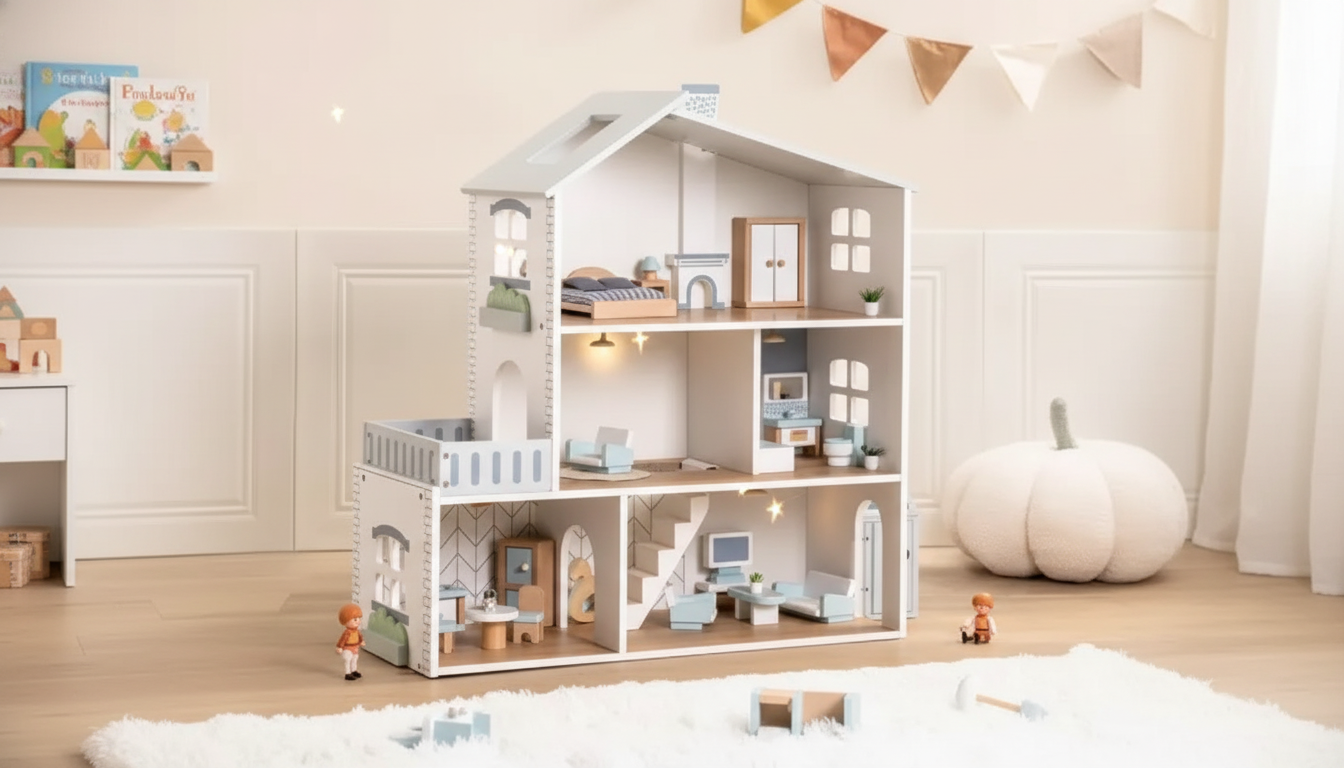
Wooden Dollhouse with 29 Accessories & Customizable Lighting: A Play-Ready Home for Big Stories
A wooden dollhouse feels extra special when it’s ready for storytelling right away—no scrambling for furniture, no half-finished “rooms,” and no play getting stuck because the basics are missing. Add customizable lighting, and the house can shift from bright morning routines to cozy bedtime scenes in seconds. Below is a practical guide to what makes a dollhouse feel complete from day one, why lights change how kids play, and how to set up the space so it stays fun (and manageable) for years.
What Makes a Wooden Dollhouse Feel “Complete” on Day One
A dollhouse is most satisfying when kids can jump straight into play and return to it again and again without the structure wobbling, the rooms feeling cramped, or the stories running out of “everyday life” pieces.
- A sturdy wooden build: Wood tends to handle frequent rearranging, moving from room to room, and the normal bumps of enthusiastic play. Look for smooth edges and a stable base that doesn’t rock during use.
- A roomy, readable layout: Defined rooms help kids “place” a story—kitchen scenes feel different from bedroom scenes when each zone has enough space for furniture and figures.
- Accessories that cover daily-life moments: Meals, sleep, relaxing, and hosting “guests” are the routines that keep play moving. If those pieces are included, the house doesn’t need immediate add-ons.
- Recognizable furniture silhouettes: When a chair looks like a chair and a bed reads as a bed at a glance, kids can set scenes faster and transition between ideas without getting frustrated.
- Lighting options: Light turns “a pretty setup” into a setting—especially when kids want to play out nighttime routines and cozy scenes.
Customizable Lighting: More Than a Cute Feature
Lighting changes the dollhouse from a static display into a stage. The ability to shift brightness or mood can refresh the entire environment without adding more toys, which often leads to longer, more creative play sessions.
- Scene-building support: Kids can create morning routines, bedtime wind-down, party moments, or even a “stormy night” storyline simply by changing the lighting.
- Longer play without “new stuff”: When the house can transform, kids tend to loop back into play with new ideas—same rooms, different atmosphere.
- Emotion-driven storytelling: Softer light often invites quieter caretaking play (tucking in dolls, reading time). Brighter light can match energetic scenes like cooking, hosting, or cleaning.
- Better visibility for tiny pieces: Practical but real: lights make it easier to see and place small accessories without dumping everything out.
- A parent-friendly ritual: Turning on “day mode” to start and “night mode” to finish can become a gentle routine that helps signal transitions.
For a broader perspective on why open-ended play matters, the NAEYC overview on play highlights how play supports learning and development across ages (NAEYC: The Value of Play).
What’s Included: Accessories That Expand Storytelling
A 29-piece accessory set is a strong starting point because it can supply multiple rooms and multiple types of scenes without requiring immediate additional purchases.
Quick Comparison: Features That Matter Most
| Feature | Why It Helps | What to Look For |
|---|---|---|
| Wooden construction | Stability during active play and frequent rearranging | Smooth edges, solid panels, reliable joints |
| 29 accessories included | Immediate, varied play without needing extra purchases | Room basics + a few “story starters” (small pieces that spark scenes) |
| Customizable lighting | Adds day/night storytelling and mood-based scenes | Simple controls, consistent illumination, kid-friendly operation |
| Room layout | Makes organizing scenes easier and encourages role-play | Clear room zones and space for furniture placement |
| Easy setup/maintenance | Less downtime, fewer missing parts, easier cleanup | Organizable accessories, straightforward assembly steps |
Choosing the Right Size and Layout for Your Space
Safety, Materials, and Everyday Durability
For additional toy-safety basics, these references are helpful: AAP: Toy Safety and Choosing Age-Appropriate Toys and the CPSC: Toy-Related Deaths and Injuries (Safety Overview).
Setup Tips That Make Play More Fun (and Cleanup Easier)
Product Highlight: Wooden Dollhouse with 29 Accessories & Customizable Lighting
If the goal is a play-ready set that supports both decorating and long, narrative role-play, Wooden Dollhouse with 29 Accessories & Customizable Lighting is designed to start strong right out of the box. With included accessories and lighting that can shift the mood of scenes, it’s a solid pick for kids who love setting up “life moments” like meals, hosting, and bedtime routines.
Two add-ons that can make playtime logistics smoother for grown-ups: a simple routine guide like Returning to Work After Motherhood: Your Ultimate Guide for Stay-at-Home Moms (helpful for planning calmer schedules and transitions) and a structured checklist resource like Boost Your AI Prompts for Better Output – Checklist for Creators, Coaches & Entrepreneurs | Easy Prompt Upgrades for Better Output | Digital Download (useful for creating consistent household systems, including toy organization routines).
FAQ
What age is a wooden dollhouse with accessories best for?
Many kids enjoy dollhouses most in the preschool through early elementary years, when pretend play and storytelling really take off. Because small accessories can be a choking risk for younger children, supervision may be needed—always follow the product’s stated age range and safety guidance.
How do customizable lights change the way kids play with a dollhouse?
Lights make it easy to switch from daytime to nighttime scenes, which naturally adds new storylines like bedtime routines, sleepovers, and “quiet time” moments. Changing the lighting can also refresh play without adding new toys, often extending how long kids stay engaged.
How can accessories be stored so they don’t get lost?
Sort pieces by room in small bins or a compartment organizer, and keep a separate “tiny pieces” container for the smallest items. A quick cleanup habit—returning items to their bins before turning the lights off—helps keep the set complete.










Leave a comment